 Climate Change Impact
Climate Change Impact
Climate Change Impact
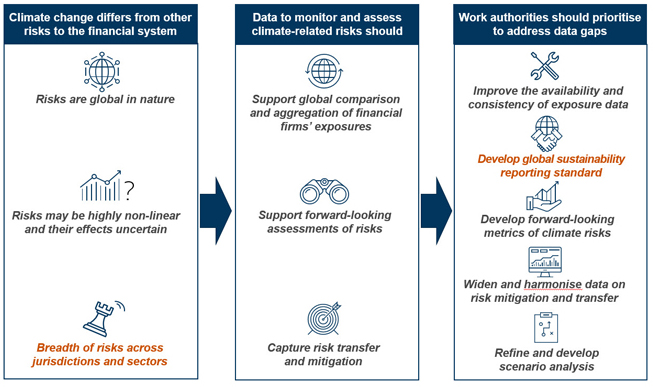
Climate change poses systemic risks to the financial sector, driving potential instability through physical damages (natural disasters) and disorderly transitions to a low-carbon economy. Banks and insurers face devaluation of assets, higher risk premiums, and losses, while simultaneously identifying significant investment opportunities in green technology and sustainability-linked products, estimated at over $2 trillion in potential opportunities.
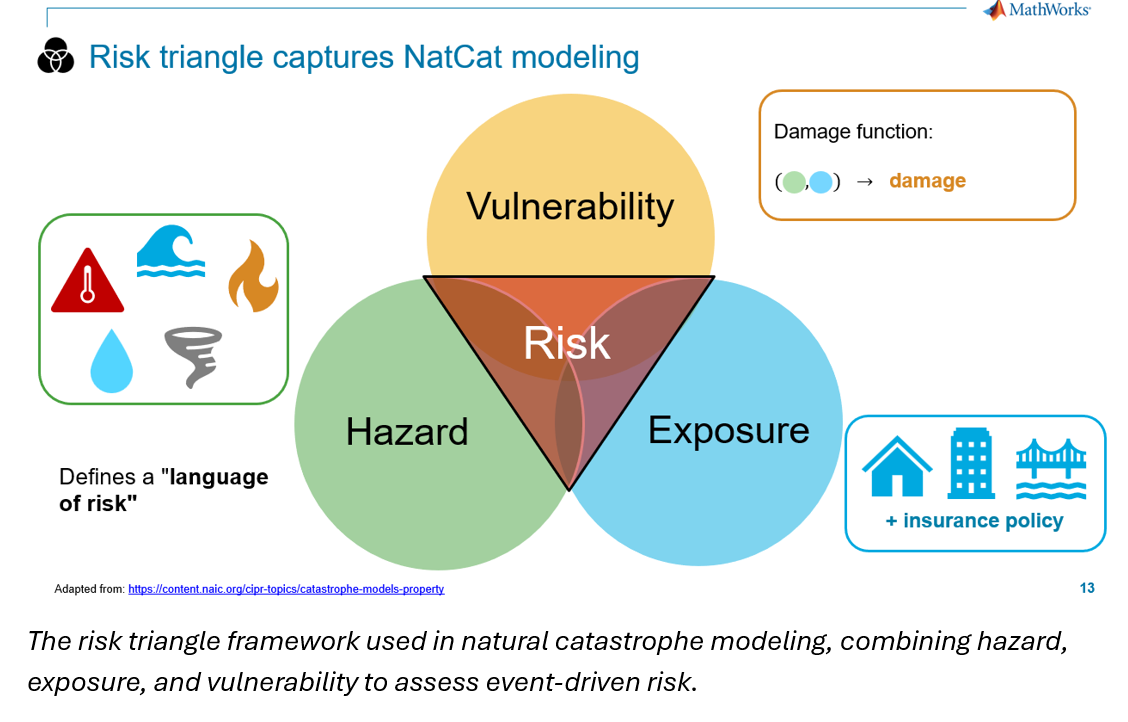
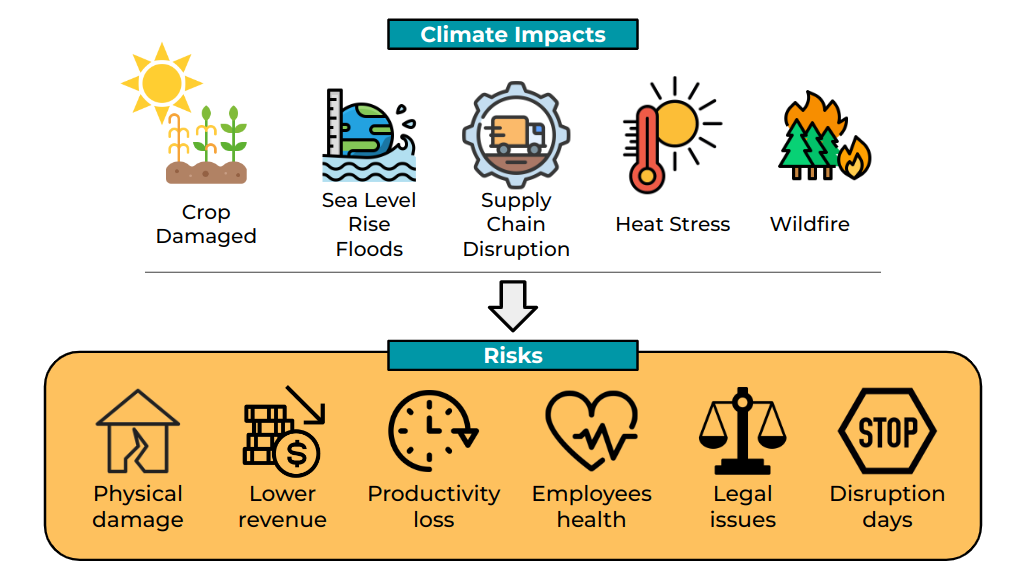
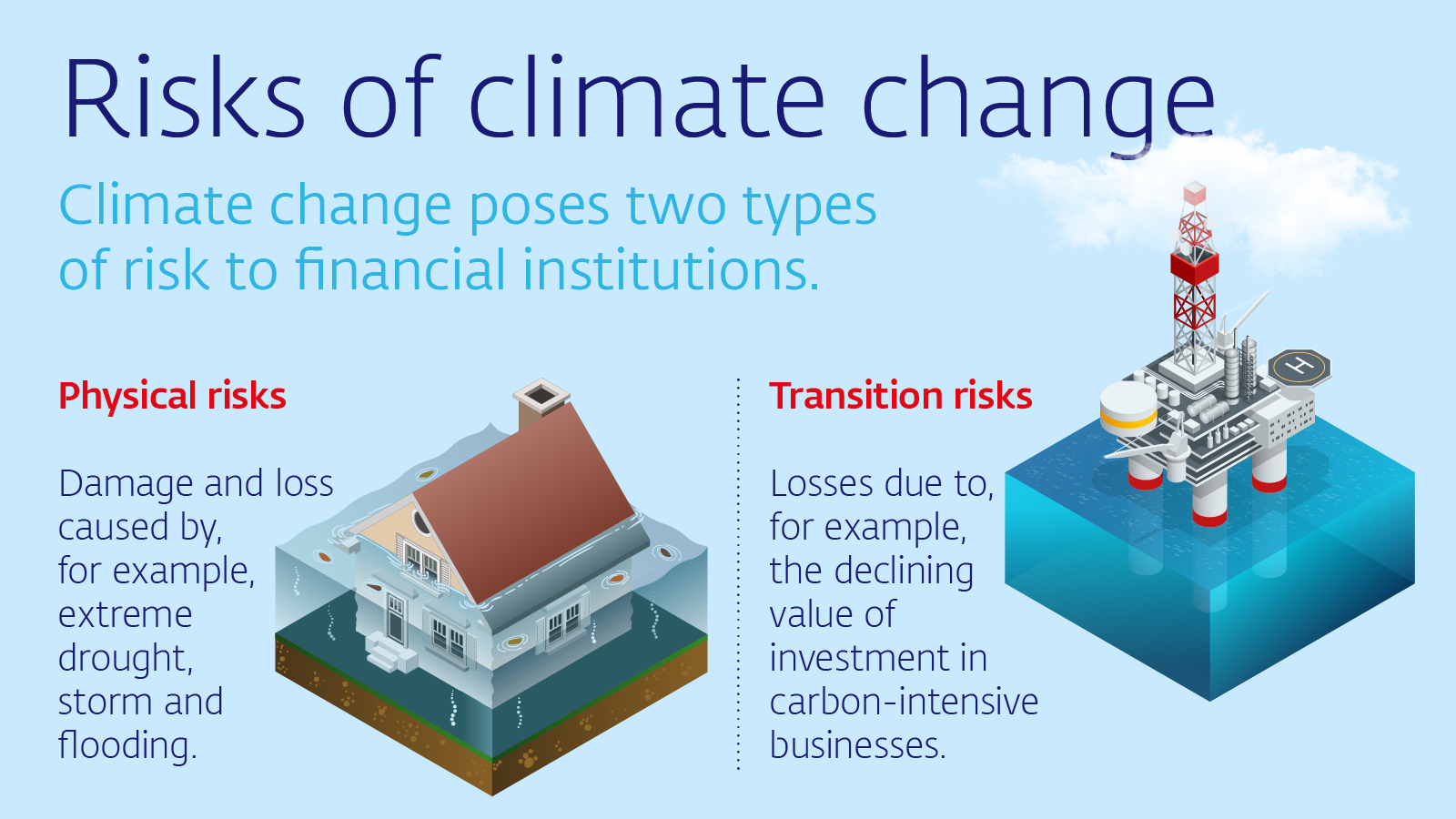
Increasing frequency of extreme weather events (floods, wildfires) directly damages assets, causing financial losses, affecting insurance underwriting, and damaging infrastructure.
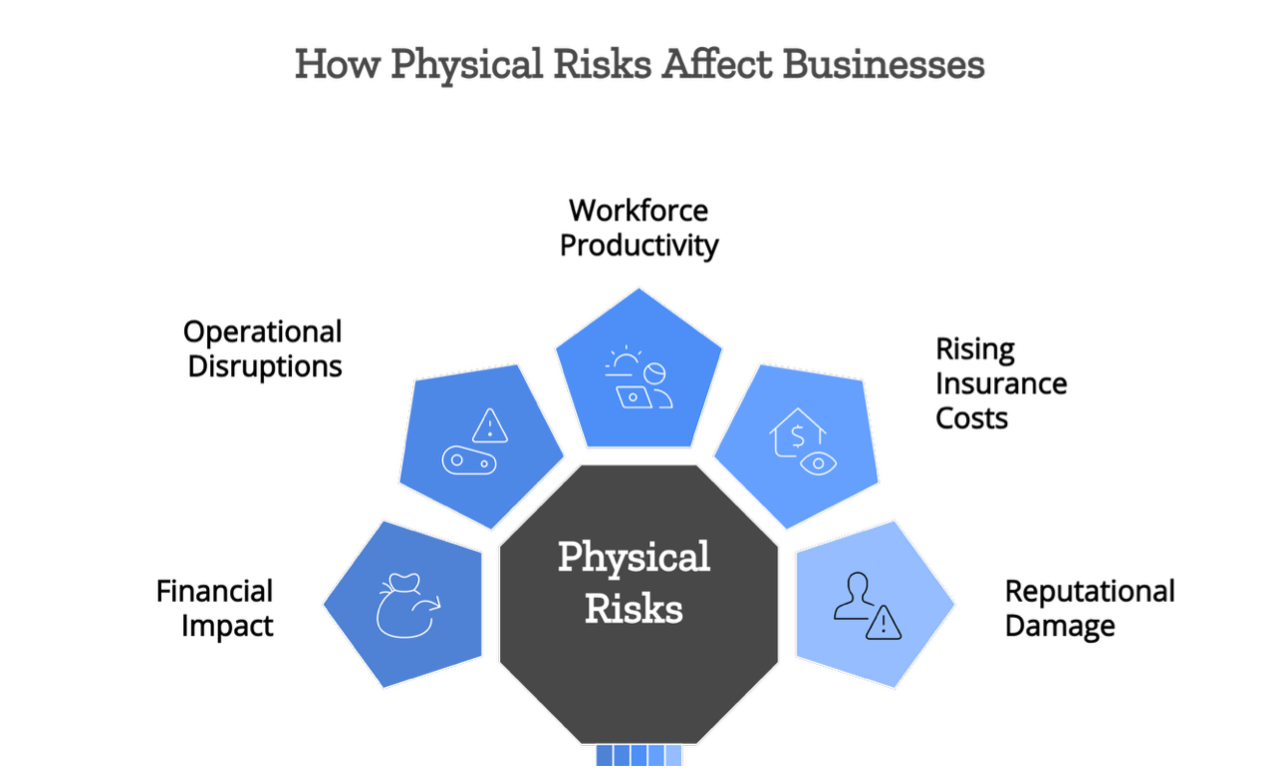
Shifts toward a low-carbon economy—such as carbon taxes, regulations, and technological shifts—can rapidly reduce the value of fossil fuel assets (stranded assets).Such developments can rapidly reduce the value of carbon-intensive assets, creating stranded assets, particularly in fossil fuel industries. Financial institutions heavily exposed to these sectors face asset devaluation and increased credit risk.
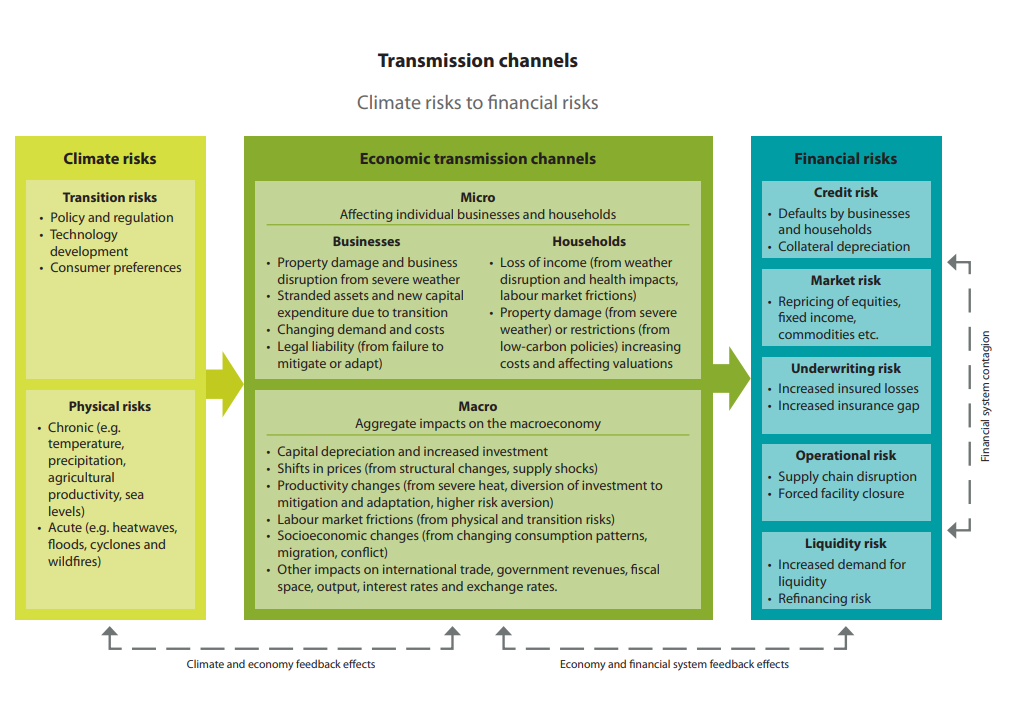
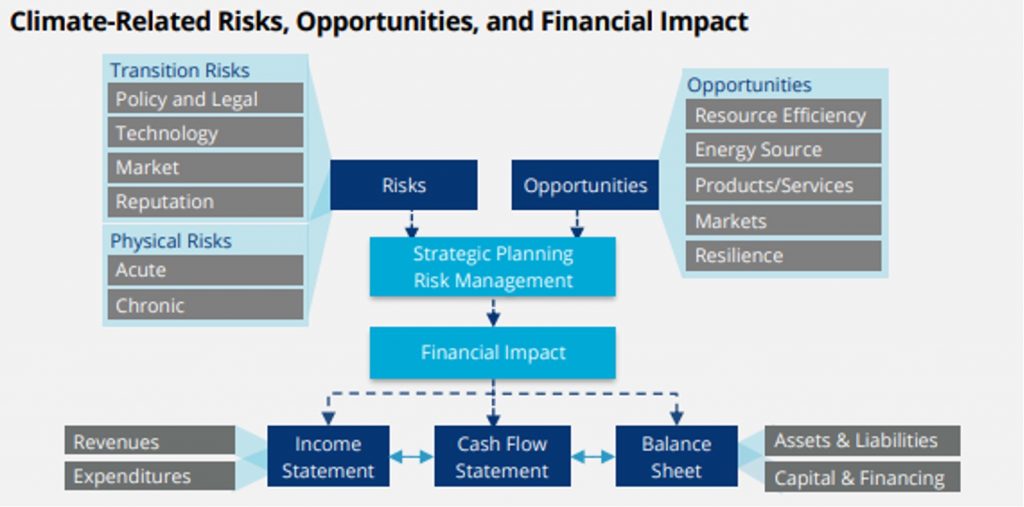
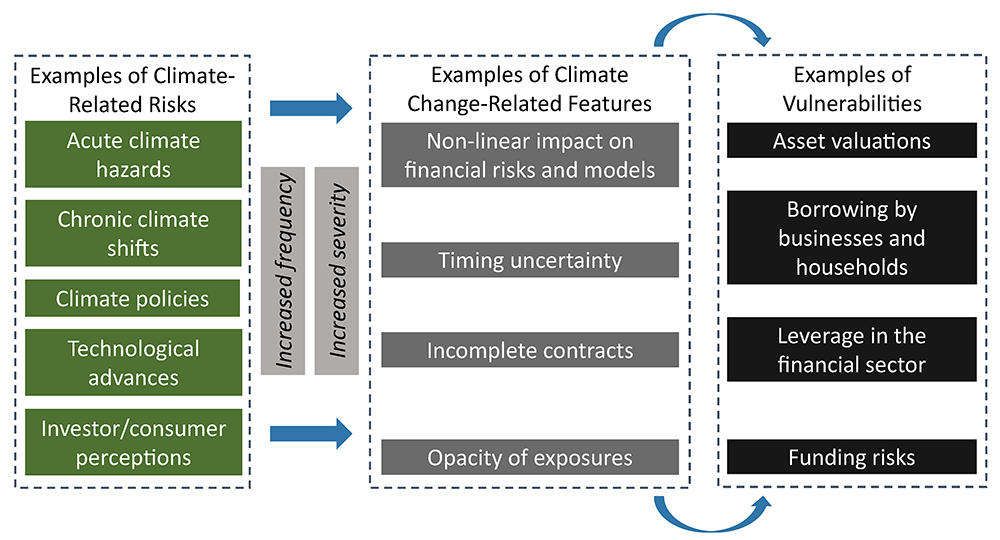
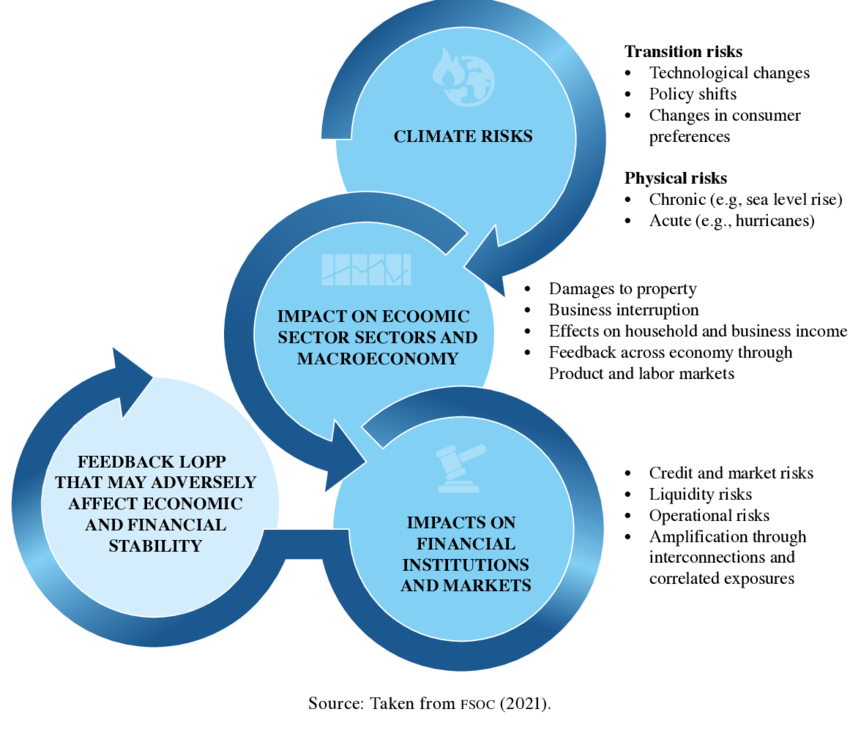
These risks can, spread across borders and sectors, causing, shocks that threaten, overall financial stability.Unchecked climate exposure may create cascading financial shocks, threatening global financial stability. The International Monetary Fund has emphasized that climate-related risks must be integrated into macro-financial supervision frameworks to prevent systemic instability.
Banks and investors are shifting capital toward renewable energy and sustainable projects, with low-carbon transition opportunities estimated in the trillions of dollars.While climate change presents serious financial risks, it also creates transformative investment opportunities. The global transition to clean energy, sustainable infrastructure, and low-carbon technologies is expected to unlock trillions of dollars in economic activity.Investors who proactively adapt to climate-related trends can capture long-term growth while contributing to environmental sustainability.
Financial markets are demanding better, high-quality information regarding climate risks, leading to the rise of disclosure frameworks like the TCFD (Task Force on Climate-Related Financial Disclosures).As climate risks become financially material, markets are demanding greater transparency and standardized reporting. Investors now expect high-quality, comparable climate-related data to make informed decisions. Frameworks such as the Task Force on Climate-Related Financial Disclosures (TCFD) have emerged to guide companies in reporting climate risks, governance practices, and transition strategies. Enhanced disclosure improves market efficiency and helps stakeholders better assess exposure to climate-related risks.

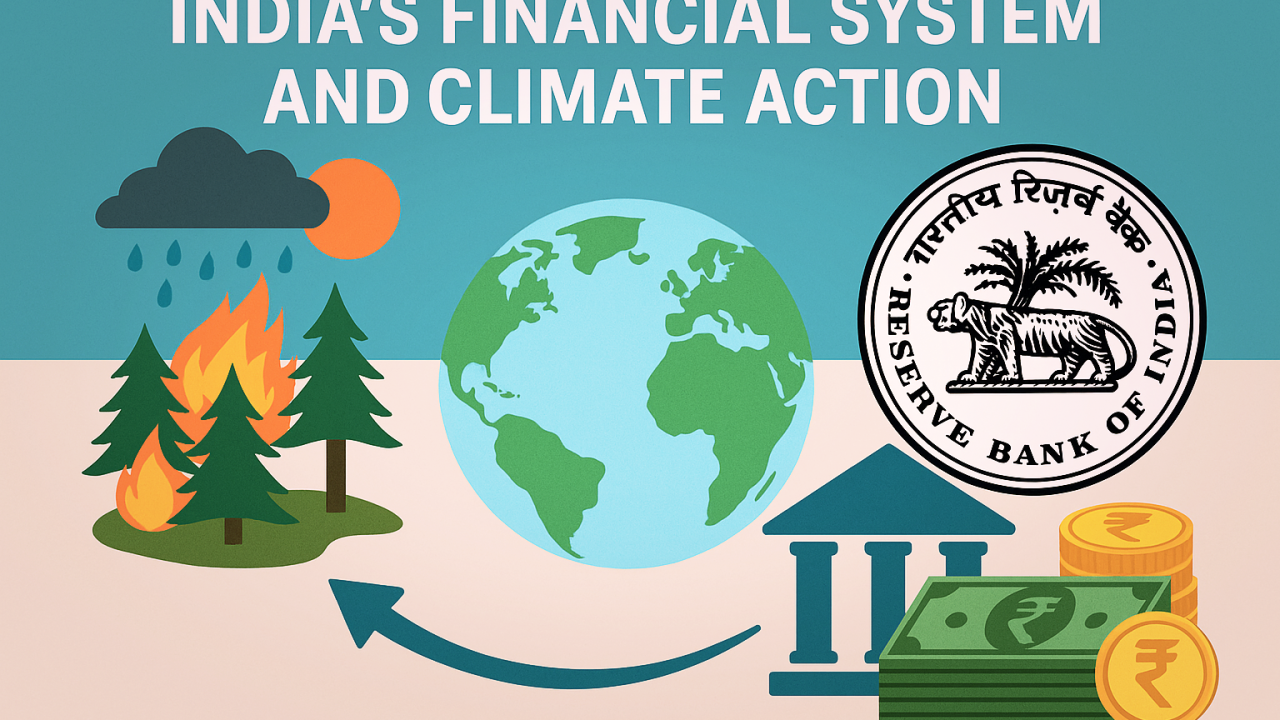
Rising, unpredictable climate events can lead to systemic shocks, with insurance losses and falling asset prices causing widespread financial instability.Climate change is reshaping the financial landscape. Institutions that integrate climate risk assessment into their strategies will be better positioned to protect assets, maintain stability, and capitalize on emerging green finance opportunities. Proactive risk management, transparent disclosure, and sustainable investment strategies are no longer optional—they are essential components of long-term financial resilience.

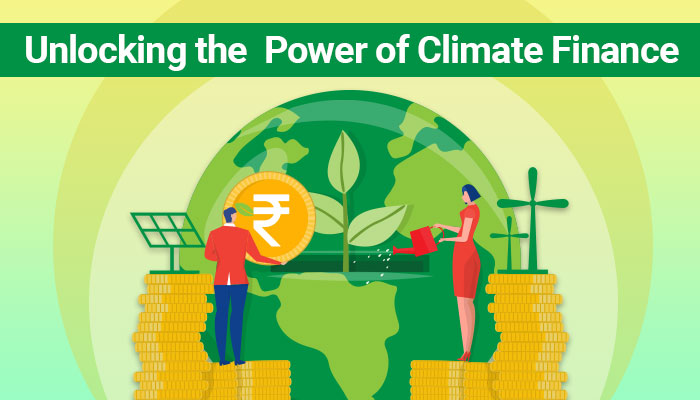
Stress testing and scenario analysis for climate-related risks.Incorporating ESG (Environmental, Social, Governance) factors into credit and investment decisions.
Issuing green bonds to fund environmentally friendly projects (renewables, sustainable infrastructure). Launching climate-focused investment funds.Supporting carbon trading and offsets to incentivize emission reductions.
Developing climate-risk insurance products for agriculture, property, and coastal areas.Parametric insurance products that pay out automatically when certain climate thresholds are met.
Aligning with frameworks like TCFD (Task Force on Climate-related Financial Disclosures)for transparent reporting.Preparing for regulatory capital requirements linked to climate risks.